
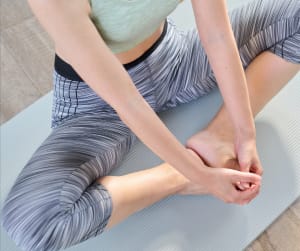
If you've been stretching your hips for months—or even years—and they're still tight, you're not alone.
Many adults spend countless hours stretching without seeing meaningful improvements in mobility or pain.
The reason may surprise you.
Your hips may not actually need more stretching.
In many cases, tightness is your body's way of protecting itself.
Why Hips Feel Tight
Most people assume tightness means muscles are too short.
Sometimes that's true.
But often, tightness is a protective response from the nervous system.
Your body creates tension when it doesn't feel stable or strong enough to move safely.
Think of tightness as a warning light on your dashboard.
The warning light isn't the problem.
It's a signal that something else needs attention.
The Sitting Problem
Modern life creates the perfect environment for hip dysfunction.
Many adults spend:
- 8+ hours sitting at work
- Driving in the car
- Sitting while watching television
- Sitting during meals
Over time, prolonged sitting can contribute to:
- Reduced hip mobility
- Weak glutes
- Poor posture
- Lower back discomfort
- Reduced athletic performance
Stretching may temporarily relieve symptoms, but it rarely addresses the root cause.
The Missing Ingredient: Strength
One of the biggest reasons hips stay tight is weakness.
When surrounding muscles aren't doing their job, the body often compensates by creating tension.
Common areas include:
- Glutes
- Core
- Hamstrings
- Hip stabilizers
As strength improves, many people notice that tightness begins to decrease naturally.
Mobility vs Flexibility
Many people use these terms interchangeably.
They're not the same.
Flexibility is your ability to reach a position.
Mobility is your ability to control that position.
For example, someone may be flexible enough to touch their toes but lack the strength and control needed to move efficiently.
Mobility training combines movement, strength, and control.
That's why it often produces better long-term results.
Signs Your Hips Need More Than Stretching
You may need a different approach if:
- Tightness returns immediately after stretching
- You have recurring lower back pain
- You struggle with squatting
- You have knee discomfort
- You sit most of the day
- You've plateaued despite regular stretching
A Better Approach
Instead of simply stretching more, focus on:
- Improving movement quality
- Building hip strength
- Activating the glutes
- Increasing mobility
- Reducing prolonged sitting
When these pieces work together, the body often becomes more mobile without spending hours stretching.
The Goal
The goal isn't just loose hips.
The goal is a body that moves efficiently, feels strong, and allows you to enjoy the activities you love.
If your hips always feel tight, it may be time to stop asking, "What should I stretch?"
And start asking, "What is my body trying to tell me?"